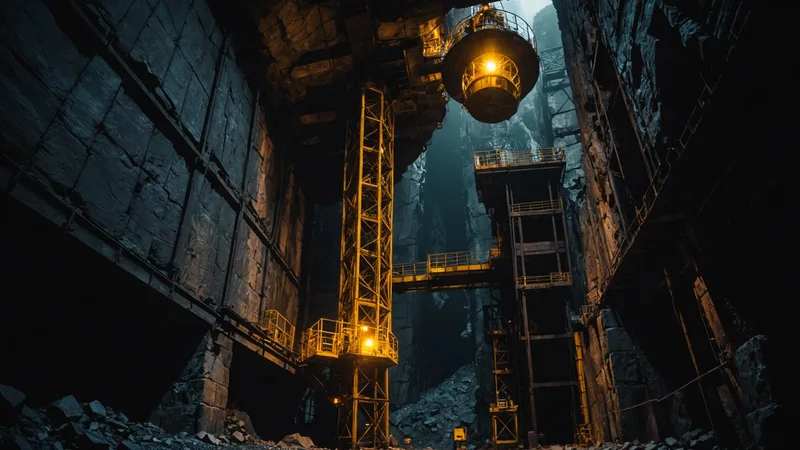
Mine safety monitoring has a persistent problem: single-modality sensor systems keep getting deployed, keep generating unacceptable false positive or false negative rates, and keep being replaced with the next single-modality sensor system that promises better performance. The pattern is not unique to any particular vendor or technology — it reflects a fundamental mismatch between what a single sensor type can reliably detect in the noise-rich, physically complex environment of an operating mine, and what operational reliability actually requires.
The operational reliability threshold for mine monitoring — particularly for intrusion detection and unauthorized access monitoring — is roughly this: false positive rate low enough that operators continue responding to alerts (call it below 2–3% in steady-state mine conditions), and false negative rate low enough for the application (for personnel safety, essentially zero misses; for asset security intrusion, 5–10% may be acceptable depending on response options). No single sensing modality we've evaluated achieves both simultaneously in a full-production mine environment.
Why Seismic Alone Fails
Seismic monitoring is the legacy approach to mine intrusion detection, and for good reason: geophones and accelerometers are passive (no RF emissions that could trigger ignition in combustible atmospheres), physically durable, and the seismic signature of human movement in mine tunnels is detectable at useful ranges. So why does seismic-only monitoring underperform in practice?
The primary failure mode is small-signal masking by structural noise. Active mining operations generate continuous broadband seismic energy from drilling, blasting, ore transport, conveyor belts, and ventilation machinery. Even in sections of a mine that are nominally inactive, structural noise transmits through the rock mass from active sections at levels that can compete with human footstep seismic signatures at 10+ meter source distances. The signal-to-noise ratio for a person walking quietly in a 2-meter tunnel at 15 meters from the nearest geophone may be only 3–6 dB above the structural noise floor during a production shift — marginally detectable at best.
The second failure mode is false positives from geological events. Rock micro-fracture, roof sag, and support structure settling all produce impulsive seismic events that share spectral characteristics with human footstep impulses. In rock masses under geologically active stress conditions — which describes virtually every deep hard-rock mine — these events occur continuously. A seismic threshold that catches small human intrusions will also catch many geological events, generating false positive rates that make the system operationally unworkable.
The consequence of both failure modes is alert fatigue. In our assessment of single-sensor seismic deployments described in published mining safety literature, alert-response rates by operators drop dramatically after the first 2–3 weeks of operation when false positive rates exceed 5–10% of alerts. Once operators stop responding to alerts consistently, the detection capability is functionally zero regardless of what the sensor is technically registering.
Why Acoustic Alone Fails
Airborne acoustic monitoring — using microphones rather than (or in addition to) contact geophones — offers complementary sensitivity to seismic sensors. Microphones are sensitive to higher-frequency content (voice, equipment sounds, footstep airborne component) that geophones attenuate, and the combination of airborne and contact sensing can improve classification. But acoustic-only deployment in active mines runs into a different but equally severe failure mode: equipment noise saturation.
The acoustic noise floor in an active mine section during production is typically 80–95 dB(A) at sensor locations near equipment. Human speech and normal movement produce 50–70 dB(A) at 5 meters distance. The signal-to-noise gap makes acoustic detection of quiet movement essentially impossible during production hours in active mine sections. Even in nominally quiet sections, HVAC systems, water pumps, and cable haulage infrastructure maintain noise floors of 55–65 dB(A) — enough to mask quiet footsteps at ranges beyond 10–15 meters.
Microphones in mine environments also suffer accelerated failure. Humidity, fine particulate (blasting dust, ore dust), and chemical exposure from blasting gases all degrade microphone capsule performance over weeks to months. Replacement cycles for microphones in active underground environments are 3–6x more frequent than for sealed geophone units in our experience, which creates maintenance burden that affects system availability.
Why Radar Alone Fails
In above-ground perimeter security, radar (typically millimeter-wave or low-GHz) is a robust intrusion detection technology. Underground, radar faces a specific failure mode that makes it largely unsuitable as a primary monitoring sensor in metallic-infrastructure-rich environments: metallic infrastructure reflections.
Mine tunnels contain extensive metallic infrastructure: rail lines, cable trays, support brackets, pump housings, conveyor frames, and ventilation ductwork. All of these are strong radar reflectors. The radar cross-section of a human at Ku-band (15 GHz) is approximately 0.3–1 m², which is comparable to the RCS of a 10-cm section of metallic cable tray at the same range. In a typical mine corridor with dense infrastructure, the clutter-to-target ratio makes Doppler-based or range-gated radar detection of humans unreliable — the false positive problem from metallic clutter is severe, and it cannot be solved by threshold adjustment without unacceptably increasing false negatives.
Long-range radar (lower-GHz) has better range but worse spatial resolution, compounding the clutter discrimination problem. Ground-penetrating radar (as discussed in our earlier article on GPR for tunnel detection) operates in a fundamentally different mode and is not applicable to in-tunnel personnel monitoring.
We are not saying radar has no utility in underground environments — through-wall or through-rock radar for detecting activity behind a surface has specialized applications. The claim is narrower: radar as a primary in-tunnel personnel intrusion sensor in metallic-infrastructure-rich mine corridors generates clutter-driven false positive rates that make operational deployment impractical without additional modalities to gate alerts.
The Case for Three-Modality Fusion
The argument for multi-modality fusion is straightforward: the failure modes of seismic, acoustic, and radar are largely orthogonal. Seismic fails on small signals in high-structural-noise conditions. Acoustic fails on equipment noise saturation. Radar fails on metallic clutter. The events that cause false positives in one modality (geological micro-fracture triggering seismic; equipment startup triggering acoustic; large metallic objects triggering radar) are different enough that they are unlikely to trigger all three simultaneously.
A third sensing modality — we favor passive infrared (PIR) or thermal imaging as a complement to seismic + acoustic in mine environments, or alternatively magnetic anomaly detection (MAD) for ferrous infrastructure scenarios — adds another orthogonal failure mode. PIR fails on temperature-equilibrated environments (a person who has been stationary long enough to reach tunnel temperature is not detectable). MAD fails on ferrous-clutter-dense environments (similar to radar). But combined with seismic and acoustic, the union of detection probabilities across modalities for a true intrusion event is substantially higher than any individual modality.
Bayesian Fusion Architecture
The appropriate fusion architecture for multi-modality mine monitoring is Bayesian posterior updating: each modality contributes a likelihood score for "intrusion" vs "no intrusion" given the observed signal, and the fused alert probability is computed as the posterior over these independent likelihoods combined with a prior based on environmental context (time of day, known personnel locations, scheduled activities).
Formally, for N independent sensors with likelihood ratios Λ_i = P(observation_i | intrusion) / P(observation_i | no intrusion), the fused posterior is:
P(intrusion | all observations) ∝ P(intrusion) × ∏ Λ_i
This framework has two practical advantages over threshold-based fusion (alert if any 2 of 3 sensors trigger): first, it naturally handles sensors with different confidence levels — a seismic sensor with measured 70% detection probability at the installation point contributes proportionally less to the fused posterior than one with 95% detection probability. Second, it provides a continuous confidence score rather than a binary alert, allowing operator interfaces to display graded confidence levels that help prioritize response resources when multiple simultaneous alerts occur.
The challenge in implementing Bayesian fusion correctly is obtaining calibrated likelihood ratios for each modality under the actual noise conditions of the specific mine environment. Generic sensor performance figures from vendor datasheets are not sufficient — the likelihood ratio for seismic detection in a high-noise active mine corridor is an empirical measurement that must be taken at that site, not derived from specifications. This requires a calibration phase before operational deployment, which is an often-underestimated project cost.
Operational Reliability Threshold
Based on published incident response analysis from the mining safety literature and operational feedback from mine security programs, the practical operational reliability threshold for a mine intrusion monitoring system to maintain operator engagement is:
- False positive rate: <2% of alerts in steady-state conditions (not counting scheduled maintenance windows)
- Alert-to-response latency: <90 seconds from event to operator notification
- System availability: >98% uptime excluding scheduled maintenance
- Confirmed intrusion detection rate: >90% for active movement in monitored zones
No single-modality system we have evaluated achieves all four simultaneously in a production mine environment. Three-modality fusion with Bayesian alert scoring consistently achieves the false positive rate threshold where single-modality systems do not, because low-confidence detections from one modality are not automatically promoted to alerts — they require corroboration from at least one additional channel before reaching the operator interface.
We want to be explicit about the limits of this claim: the 2% false positive threshold and 90% detection rate figures above are derived from published operational requirements in mine safety frameworks, not from a production deployment of our own system at scale. Our characterization work has been conducted in test and evaluation environments that approximate but do not fully replicate the complexity of a production mining operation. Generalization from our test data to production performance claims would be premature, and we are not making that generalization. What the published literature and our test data both support is the architectural conclusion: single modality fails, multi-modality fusion with calibrated Bayesian scoring is the path to meeting the operational threshold.
Implementation Practical Notes
For mine operators or procurement officers evaluating fusion-based monitoring systems, the questions that separate credible implementations from paper architectures:
Does the fusion algorithm use calibrated site-specific likelihood ratios, or generic sensor specifications? Generic specs produce overconfident posteriors that won't achieve the false positive threshold in practice.
How does the system handle sensor failures in the fusion? A Bayesian fusion engine that receives no data from a failed seismic node should degrade gracefully to two-modality operation with appropriately widened uncertainty bounds, not silently assume the failed sensor is "seeing nothing" (which would falsely lower the intrusion posterior).
What is the calibration procedure and how long does it take? Calibration on a real mine site requires recording baseline noise profiles across shift cycles (day/night, production/maintenance) to build the noise model used in likelihood computation. Insufficient calibration data — less than 2–3 complete shift cycles across all active production states — produces noise models that underperform when conditions change.
The monitoring problem is solvable with the right architecture. The single-sensor deployment cycle has been running in this industry for long enough that the pattern should be obvious by now: no single sensing modality will achieve both the detection rate and the false positive rate required for operational reliability in a complex mine environment. The fusion architecture is not a nice-to-have — it is the minimum viable approach for a system that will remain in active use past its first month of deployment.